Mom’s Kitchen Svg Design: A Designer’s Practical Review
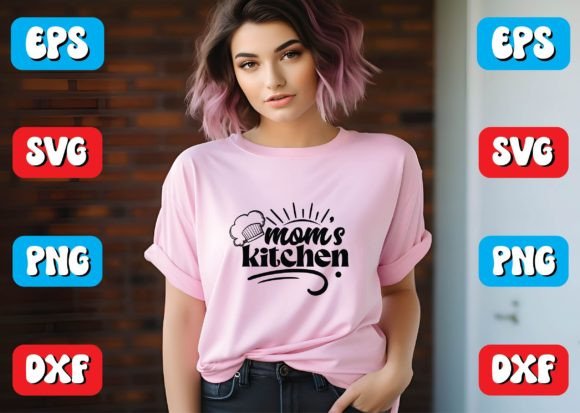
When I first opened the Mom’s Kitchen Svg Design, I immediately felt the warmth of a lived-in, bustling kitchen. The graphic leans into a nostalgic, hearty theme—think heirloom rolling pins, mixing bowls, and the kind of lettering you’d see on a hand-painted café sign. There’s a sense of comfort in its silhouette, and that mood is exactly what many of my clients hunting for personalized gifts want to capture. But as an embroidery designer, I know warmth doesn’t always translate neatly into thread. So I sat down with this cutting file and thought through every step of turning it into a stitched product, from the first hoop to the final press.
Right away, it’s important to clarify what this product is—and what it isn’t. The Mom’s Kitchen Svg Design is listed under Crafts as a Graphics item, an instant download cutting file compatible with Cricut and Silhouette machines. It is not a ready-to-stitch machine embroidery file. For anyone who runs a single-needle or multi-needle embroidery machine, that means you’ll need to digitize the artwork yourself or hand it off to a digitizer. The SVG lines are crisp and scalable, which makes the digitizing process far smoother than starting with a blurry JPEG, but the extra step is real. I’ve seen too many makers import a cutting file directly and wonder why their machine won’t read it. So, think of this as a beautiful design asset—a canvas for your embroidery project, not a finished embroidery file.
First Impressions: The Mood and Shape of Mom’s Kitchen Svg Design
The artwork has a generous, “huge kitchen graphic” feel, just as the description says. It’s bold, with a layout that fills a standard shirt front or apron bib beautifully. The visual weight is balanced—there’s a central focal point, likely a typographic element or a vintage kitchen tool cluster, surrounded by decorative flourishes. The personality is playful yet timeless, the kind of design that reads as a thoughtful gift rather than a trendy throwaway. When I imagine this stitched out on a flour-sack tea towel or a sturdy canvas tote, I can already see the satin stitch borders hugging those curves and the fill stitches adding texture to the larger shapes.
However, the detail level gives me pause in a few spots. The fine lines and tiny accents that look charming on a screen can become a nightmare under a needle if the design isn’t simplified during digitizing. I’d absolutely recommend reviewing the SVG at actual stitch size within your digitizing software. Elements like delicate whisk tines, small dots, or thin script flourishes might need to be thickened or removed entirely for a clean sew-out on textured fabrics. The overall shape is friendly to hoop placement, but the real test will be how it behaves on a curved surface like a cap or a child’s tee.
Real-Life Scenario: From a Cutting File to a Kitchen Towel Gift Set
Let me walk you through a project I mentally mapped out with this design. A regular customer wanted a Mother’s Day gift—something personal, useful, and not too precious. She chose a set of three linen-blend kitchen towels in a soft cream. The plan was to stitch the Mom’s Kitchen Svg Design in a warm terracotta and sage green palette, framed by a simple border. I started by importing the SVG into my digitizing software, cleaned up the open paths, and assigned stitch types: a light fill for the background shapes, a slightly denser satin for the lettering, and a running stitch for the decorative linework.
On the first test sew-out, the towel’s slightly nubby texture caused the thinnest lines to wobble. I increased the pull compensation and changed the underlay to a zigzag, and the second run looked crisp. The lettering remained legible, and the graphic’s overall mood held up—cozy, inviting, unmistakably “Mom’s kitchen.” The customer loved it, and I ended up adding a matching apron to her order. That’s the power of a design that emotionally connects; it creates bundling opportunities for your shop.
Where This Design Shines in Embroidery
- Custom apparel: Sweatshirts, unisex tees, and canvas aprons. The larger scale works best here.
- Home textiles: Tea towels, pillow covers, and oven mitts. The theme feels right at home.
- Tote bags: A sturdy cotton tote with this design becomes a reusable grocery bag with personality.
- Personalized gifts: Add a name or date, and you’ve got a wedding shower or holiday present that tugs at heartstrings.
- Boutique product lines: If you sell at craft fairs or on Etsy, a “Kitchen” collection anchored by this graphic can tie together aprons, towels, and pot holders beautifully.
Where You Should Be Extra Careful
I’ve learned the hard way that not every design suits every surface. With Mom’s Kitchen Svg Design, keep these cautionary notes in mind:
- Small hoop sizes: This graphic is large by nature. For a 4x4 hoop, you’ll scale it down significantly, and the details may close up. Test the scaled version before committing to a batch.
- Stretchy fabrics: On a thin jersey tee, the dense fill areas could cause puckering. Use a no-show mesh stabilizer and baste the fabric to a cutaway backing.
- Dark fabrics: The design’s warmth can get lost on black or charcoal. I’d recommend light thread colors and a higher stitch density for contrast, or consider a white underlay first.
- Curved surfaces like caps: The wide layout may not conform well to the front panel of a baseball cap. Stick to flat or gently curved items.
- Frequent washing: If the finished product will be laundered often, avoid tiny detached elements that could fray. Secure all trims and consider a satin stitch edge for durability.
Digitizing Notes: From SVG to Stitch File
Because the product is a cutting file, your digitizing choices will make or break the project. The SVG paths are clean, which is a huge time-saver. I could easily select the outer boundary for an appliqué foundation, too. Actually, an appliqué approach with this design could be stunning—cutting the main shape from a cotton print fabric and then stitching the details on top. That would also reduce the stitch count and give the piece a tactile, dimensional look that fits the homey theme.
If you’re going full embroidery, think about thread color contrast. The original artwork likely uses a single color or a duo-tone palette. I’d keep the thread choices simple—three or four colors max—to avoid a busy, muddled result. The fill stitch direction should follow the flow of the design; for the lettering, a satin stitch with a slight angle adds a handcrafted feel. I also recommend running a sample in grayscale on your screen first to see how the values hold up without color. That’s a trick I use to check if the design will still read as a cohesive image on a monochromatic thread version.
Commercial Use and Buyer Confidence
For Etsy sellers, craft business owners, and boutique brands, the Mom’s Kitchen Svg Design carries a friendly, commercial appeal. Customers browsing for kitchen-themed gifts immediately recognize the sentimental value. A well-stitched version on a high-quality blank can elevate a simple tea towel into a $25+ item at a craft fair. The design’s recognizability helps build brand consistency—if you use it across a collection, your packaging and product photos will have a unified feel.
However, always confirm the license terms before selling finished goods. The product description doesn’t explicitly state commercial use rights for physical products, so I’d reach out to the seller. As a reviewer, I can’t speak to the exact usage terms, but I always advise my readers: never assume. A quick message can save you from a copyright headache later. The same goes for digital resale; you cannot resell the SVG file itself, but creating a digitized embroidery file from it for personal use is typically fine. If you plan to sell that digitized embroidery file, you’d need the designer’s explicit permission.
Practical Test-and-Use Checklist
Before you load this design into a production run, run through these steps. I do this for every new graphic I turn into an embroidery piece:
- Test on scrap fabric: Use the same fabric type and stabilizer you’ll use for the final product.
- Check thread color contrast: Hold the thread cones next to the fabric under natural light; what looks good on the spool often shifts when stitched.
- Review stitch density: Too dense and your fabric will ripple; too light and the design looks sparse. Adjust the digitizing file accordingly.
- Confirm hoop size: Measure the design’s dimensions in your embroidery software and ensure your most common hoop can accommodate it with comfortable margins.
- Inspect small details: Zoom in and look for any isolated stitches, tiny holes, or overlapping nodes that could cause thread breaks.
- Test in black and white: Print a mockup in grayscale to see if the value distribution is balanced. This is especially helpful for customers who may want a single-color version.
- Compare light and dark backgrounds: Stitch on both a light and dark scrap to see which one makes the design pop. Often, the original artwork is optimized for a white background.
- Use proper stabilizer: For towels, I prefer a tear-away with a water-soluble topper. For apparel, a cutaway stabilizer prevents shifting.
Final Thoughts from an Embroidery Perspective
The Mom’s Kitchen Svg Design is a solid foundation for heartfelt, saleable embroidery projects. It’s not a plug-and-play embroidery file, but for a designer willing to digitize, it offers a clean, well-composed starting point. The mood is on point, the shape is generous, and the nostalgic kitchen vibe sells itself. I’d use it again for a tea towel set, a tote bag, or even a wall hanging in a nursery that shares a kitchen theme. The key is to respect the limitations of your embroidery machine and the fabric you’re working with, and to always, always test before you stitch for a client.
If you’re an Etsy seller or a handmade shop owner looking to add a cozy, family-oriented graphic to your lineup, this one is worth the digitizing time. Just remember: it’s a cutting file first, and your skill in converting it to stitches will determine how much your customers love the finished product.