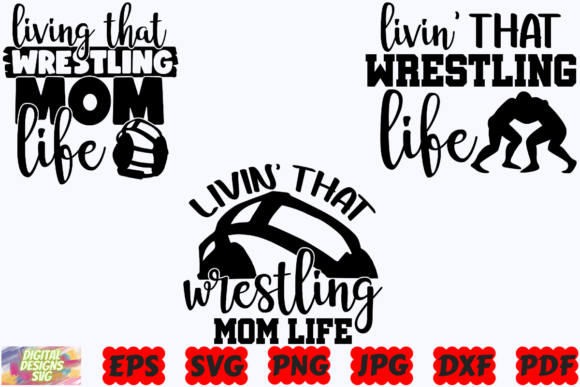
Livin That Wrestling Mom Life Design Review
When a new embroidery file lands on my desktop, I always open it with the mindset of a working designer. I’m not just looking at the graphic; I’m picturing it stitched out on fabric, placed on a finished product, and held in a client’s hands. Today, I’m evaluating the “Livin That Wrestling Mom Life” design from that practical perspective.
The Immediate Mood and Project Fit
This design has an instantly recognizable personality. It’s playful, proud, and a little bit tough—the perfect blend for celebrating a very specific kind of motherhood. The layout feels bold and celebratory, which is exactly the mood you want for a custom apparel piece meant to be worn with pride. The first question I ask myself is: what kind of embroidery project does this belong to? My mind immediately goes to items meant for gifting or personalization. A cozy crewneck sweatshirt for the mom herself, a sturdy tote bag to carry gear to tournaments, or even a bold patch that could be applied to a jacket or backpack. The theme is so focused it practically dictates the product.
Performance Across Real Embroidery Projects
In real-life use, a design’s success hinges on how it translates from screen to stitches. Let’s walk through some scenarios.
For custom apparel like t-shirts and sweatshirts, the bold statement should stitch out cleanly. I’d recommend a mid-weight cotton or a stable poly-cotton blend for best results. On a tote bag, using a heavier canvas, the fill stitches will really pop, adding to that handmade, durable feel customers love. Thinking of baby clothes or a kids’ hoodie? Scale it down carefully, as the lettering and elements will need to remain clear even at a smaller hoop size.
This design also has strong potential as a personalized gift. Imagine a custom embroidered pillow cover for a wrestling mom’s home office, or a neat, small rendition on the corner of a kitchen towel—a fun surprise gift. For small business merchandise, say in an Etsy shop focused on sports moms, this becomes a core design asset. It could anchor a whole line of products: caps, aprons, even simple wall art if converted well. Its specificity builds brand consistency for a niche shop.
Where This Design Requires a Careful Approach
No design is universally perfect, and a thoughtful embroidery designer knows where to proceed with caution. The likely detail level here means paying close attention to small lettering and any intricate corners. On stretchy fabrics like certain jersey knits, you’ll need excellent stabilizer to prevent distortion. Embroidering on curved surfaces like caps requires testing the layout to ensure it sits well on the panel.
Dark fabric backgrounds are a classic choice for bold statements, but you must test thread color contrast thoroughly. A white or bright topstitch might be essential. For products destined for frequent washing, like youth sweatshirts, ensuring stitch density isn’t too high will prevent a stiff, uncomfortable feel. Always, always test on scrap fabric first.
Impact on Customer Perception and Value
How a design stitches out directly affects customer trust and the perceived value of your finished product. “Livin That Wrestling Mom Life,” when embroidered cleanly with good thread coverage and proper framing, speaks to professionalism. It tells the buyer you understood the theme and executed it with care. That elevates a simple sweatshirt to a cherished handmade product. For the recipient, it’s instantly recognizable and deeply personal, which boosts its giftability tremendously. In a craft fair setting or an Etsy listing, a well-executed item featuring this design creates immediate buyer engagement—it’s a conversation starter.
Practical Notes for the Working Designer
Before you hoop your first project with this embroidery file, here’s my checklist from the worktable.
- Run a test on a scrap of your intended fabric. This is non-negotiable. Check for thread breaks in small details.
- Assess your thread color palette against your fabric. Do you need a brighter top thread for clarity?
- Review the stitch density in your software preview. Will it be too dense for a lightweight tee or too sparse for a tote?
- Confirm the hoop size needed for your desired product dimension. Don’t assume.
- Create simple black and white mockups, as well as versions on light and dark backgrounds, to visualize the final product.
- Use the correct stabilizer for your fabric type. This is key for maintaining the design’s visual appeal.
- Most crucially, confirm the licensing terms for this digital embroidery file. Is it cleared for commercial use in your small shop products? Never proceed without knowing.
Remember, this is a digital download, so the quality of your final embroidered product rests entirely on your preparation and technique. The design provides the blueprint; your skill brings it to life.
The Final Stitch: A Design Built for Connection
Evaluating “Livin That Wrestling Mom Life” isn’t about counting stitches or measuring pixels. It’s about recognizing a design that connects powerfully with a specific person. In the bustling world of craft businesses and handmade shops, that connection is your product’s heart. When you embroider this onto a tote bag for a client, or stitch it onto a sweatshirt for your Etsy inventory, you’re not just applying a graphic. You’re crafting a badge of honor. Approach it with the practical care I’ve outlined, and your finished product will carry that sentiment perfectly, from the first loop of the satin stitch to the last knot.