A Designer's Review of the Baseball Mom Voice Embroidery Design
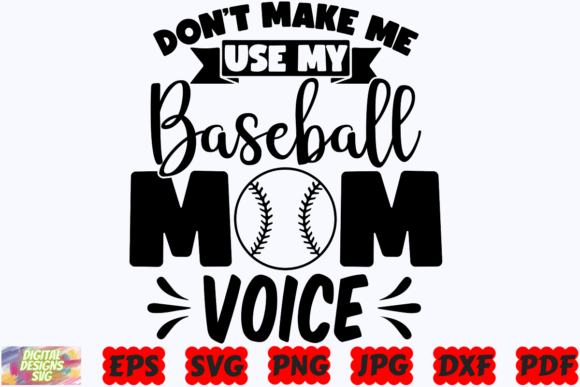
Let’s talk about this design from the perspective of someone who’s going to actually stitch it, sell it, or gift it. When I look at the Don't Use My Baseball Mom Voice embroidery design, I’m thinking about the real projects. I’m imagining it stitched onto a canvas tote bag for a client, or as a playful accent on a child’s sweatshirt. The first impression is clear: it’s humorous, relatable, and carries a strong, loving personality. The layout and theme feel like they belong on something worn or used in casual, joyful settings—a perfect fit for the crafts and graphics world where personality sells.
The Mood It Creates and Where It Naturally Belongs
This design isn’t subtle. It’s a statement. The mood is lighthearted and confident, with a touch of that familiar, protective love every sports parent understands. Visually, the personality is bold. For an embroidery project, this translates to a design that needs to be placed on products where that statement is welcomed. It’s perfect for custom apparel like team mom sweatshirts, for personalized gifts like a dad’s cap, or for small shop merchandise like boutique kitchen towels. It wouldn’t feel right on formal wear, but on a well-made embroidered patch for a bag or a baby embroidery item for a nursery, it shines.
Performance in Real-Life Embroidery Situations
Now, how does it perform when the digital file becomes physical stitches? For most machine embroidery design applications on stable fabrics, this should work well. Think of a sturdy tote bag design or a cotton apron. The lettering and implied visual elements likely rely on clean lines and distinct shapes, which are ideal for satin stitch borders or fill stitch areas. On a sweatshirt embroidery, with proper stabilizer, it would hold up to wear. For holiday embroidery gifts, like a festive pillow cover, it adds a personalized, familial touch that recipients love.
However, the real test is in the details. As a designer reviewing for commercial embroidery or craft business use, I’d be cautious with very small hoop sizes. Tiny details in the lettering or any decorative accents might lose clarity if scaled down too much. Stitch density is another key consideration; a dense design on thin or stretchy fabric, like a lightweight t-shirt, could cause puckering. Always test the design on scrap fabric first.
Where to Use This Design Carefully
Success with any embroidery file comes from knowing its limits. For this particular design, I’d advise careful application on a few specific scenarios. Dark fabric backgrounds require excellent thread color contrast planning—you might need to adjust the default color palette to ensure the message pops. Textured fabrics, like some blankets, can swallow up finer details.
Also, consider the product’s lifespan. Items that need frequent washing, like baby clothes or tea towels, demand robust stitching. Check those small corners and any potential weak points in the digitization. Embroidering on curved surfaces like caps presents a challenge for any design with a wide, flat layout; proper hooping and stabilization are non-negotiable here. Finally, for digital product sellers creating printable mockups, always test it in black and white mockups to ensure the design’s integrity is clear even without color.
Impact on Your Product and Your Customer
Using this design well affects more than just the stitch quality. It influences visual appeal, which directly ties to product value. A clean, well-executed embroidery of this humorous phrase on a high-quality hoodie instantly boosts its handmade presentation and perceived worth. For an Etsy seller or creative entrepreneur, that translates to better buyer engagement and customer trust.
It also speaks to brand consistency. If your shop specializes in family-oriented, sporty, or humorous gifts, this design asset fits seamlessly, reinforcing your niche. The giftability and recognition factor are high—people see it and immediately understand the sentiment, making it a strong choice for wedding gifts for new parents or holiday gifts for coaches. This inherent recognition lends a professionalism to your finished product when it’s executed with care.
Practical Notes for the Embroidery Designer
Before you commit this design to a client’s order or your next craft fair product, here’s my practical checklist. First, confirm hoop size. Don’t assume; run a test stitch at the size you intend to use. Inspect small details in the preview files. Are there any areas that might become a tangled mess of threads?
Always compare light and dark fabric backgrounds in your planning. You might decide to offer two different thread color schemes for your customers. Crucially, check whether the design works for both personal and commercial projects. The product description states it’s a digital download for various uses, but you must confirm licensing before selling finished items. This is a fundamental step for any digital embroidery file used in a small business.
Finally, remember that your skill as a maker brings this digital file to life. The Don't Use My Baseball Mom Voice design is a great starting point, but its success on your custom apparel, baby clothes, or embroidered patch depends on your technique. Use the right stabilizer for the fabric, select thread colors that enhance contrast and mood, and never skip the scrap fabric test. When done right, this design becomes more than a graphic—it becomes a cherished, well-made product that perfectly captures a feeling.